In France, the so-called Eco-score, now officially renamed “Environmental Cost”, is part of the Climate and Resilience Law. This score is intended to make the environmental impact of textile products more transparent for consumers. It is based on Life Cycle Assessments (LCAs) covering sixteen indicators, including CO₂ emissions, water consumption, and biodiversity impact.
Legal context and timeline
The law, adopted in 2021, obliges brands to provide honest and verifiable environmental information when selling clothing. The French government tested the method during a trial period with various scoring systems. In December 2024, a public consultation followed, and on May 15, 2025, the European Commission gave the green light. After approval by the French Council of State (Conseil d’État), voluntary implementation can begin in the second half of 2025, with mandatory enforcement expected in 2026.
What does this mean for clothing brands?
All producers, importers, and distributors placing clothing on the French market – including foreign brands – fall under the law. So far, no exemptions for small brands have been mentioned. The Environmental Cost score must provide insight into the entire life cycle of a garment. Brands communicating environmental performance of their products must follow the official methodology and publish their scores on a central platform.
Importantly: one year after the launch, third parties (such as distributors or apps) will also be allowed to calculate scores based on publicly available data. These are often less favorable because they use standard values. Brands are therefore advised to calculate their own scores for a more accurate and representative result.
Impact on producers and supply chain partners
The obligation to provide transparent Environmental Cost information affects the entire textile chain. Producers, spinners, dyers, and garment manufacturers will increasingly be asked to provide detailed and reliable data on raw materials, energy use, chemical usage, and transport. Even companies that do not currently deal directly with end consumers will be indirectly involved in the scoring of garments. This requires a greater degree of data sharing and transparency among supply chain partners.
Methodology and label system

The score is displayed numerically, no longer in the ABCDE format. A new indicator has been introduced: the environmental cost per 100g label, enabling consumers to more easily compare garments based on environmental impact per unit of weight.
The method takes into account:
- Product details (such as material type, weight, and origin of production and processing stages)
- Company practices (such as repair services, traceability, and assortment breadth)
- Environmental factors not included in the European PEFCR guidelines, such as microplastics, biodiversity loss, and emotional durability
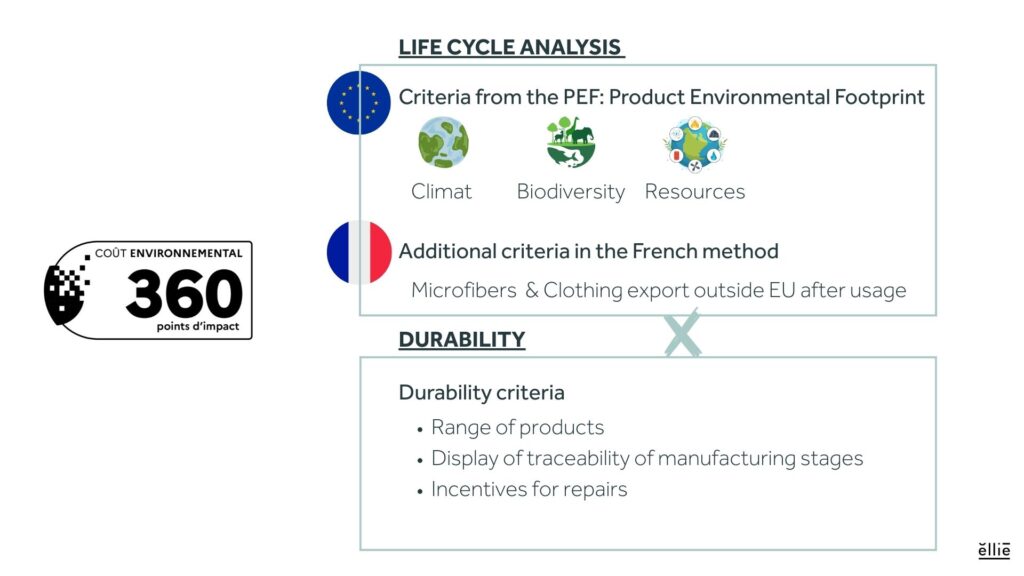
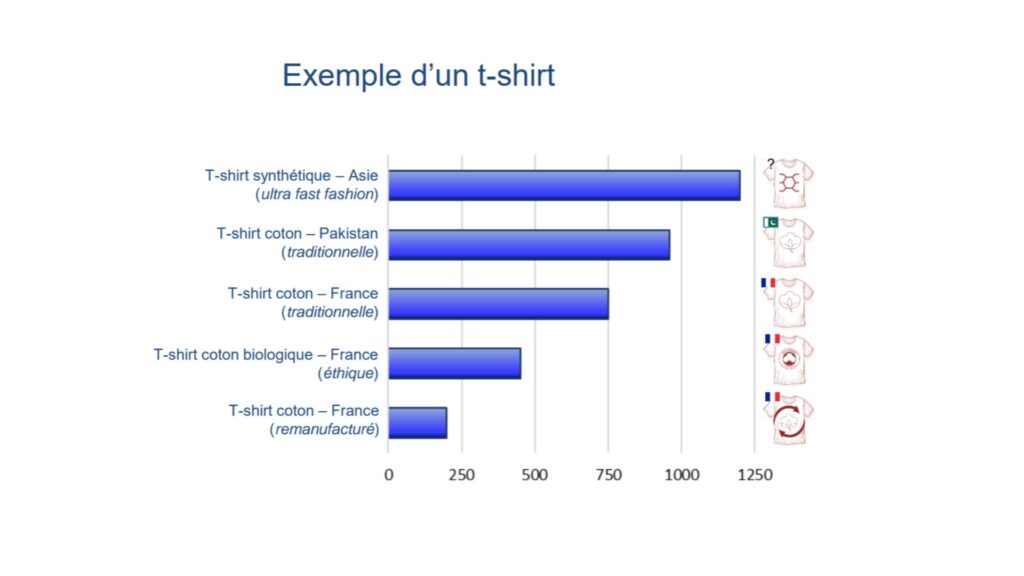
Although France aims to align the method as much as possible with the European Product Environmental Footprint Category Rules (PEFCR), differences remain. The French score includes additional impact categories and adjustments to address known weaknesses in the European directive – for example, its underestimation of the environmental impact of polyester. (Read our latest blogpost on the PEFCR here)
Which products are covered?
The regulation applies to:
- New and recycled garments in categories such as T-shirts, trousers, jackets, underwear, and socks
- Products of which more than 80% of the mass consists of textile fibers
Currently excluded are:
- Second-hand products
- Clothing with more than 20% non-modelable materials
- Electronically integrated products
- Leather accessories and protective clothing
Recycling and end-of-life phase
The Environmental Cost score looks at the entire life cycle, including the end-of-life stage. Recycled fibers or products that are reusable or recyclable may improve the score, provided reliable data on origin and processing is available. Recyclers and sorting centers may play a role in supplying relevant LCA data or material passports. However, this remains a complex element, and the methodology is still evolving to model these impacts more accurately.
Tools and support
The French government provides support via:
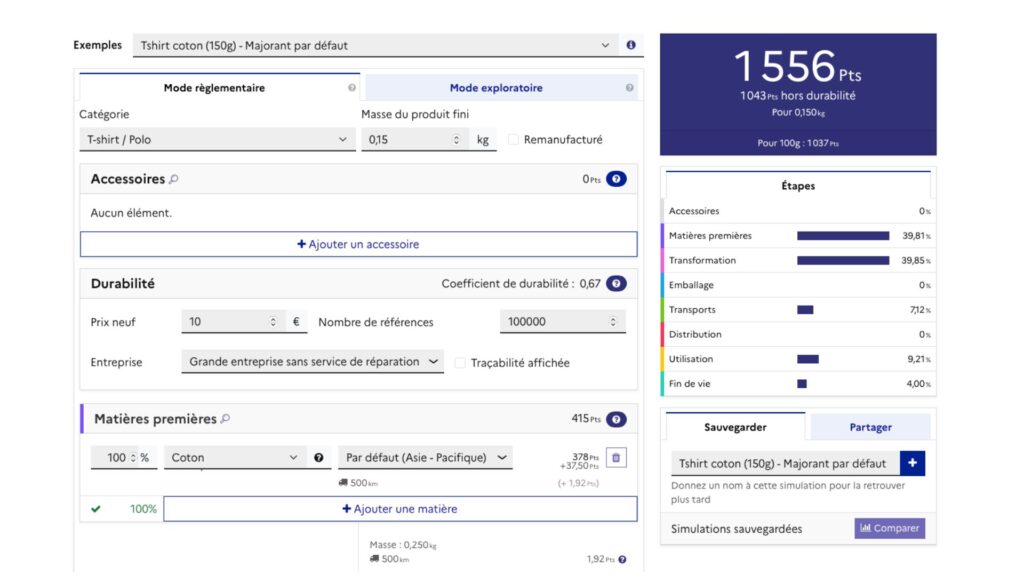
- Ecobalyse: a free calculation tool for assessing the environmental cost of textiles (and food)
- ADEME guidelines: official documentation for score calculation and communication
What now?
The next methodology update (version 2.7) is expected soon. It will provide more details about product segments, calculation parameters, and exceptions. Companies are advised to start preparing now by gathering product data and exploring the calculation tool. This allows them to gain a head start during the voluntary phase – and to be better prepared for the 2026 obligation.
Sources:
- Official website Ademe – Affichage Environnemental
- 2024-12-04 – Webinaire consultation affichage textile vF.pdf
- Blogpost Carbon+Alt+Delete: [Textile Industry] The French Textile Eco-score: Key Updates and What Fashion Brands Need to Know